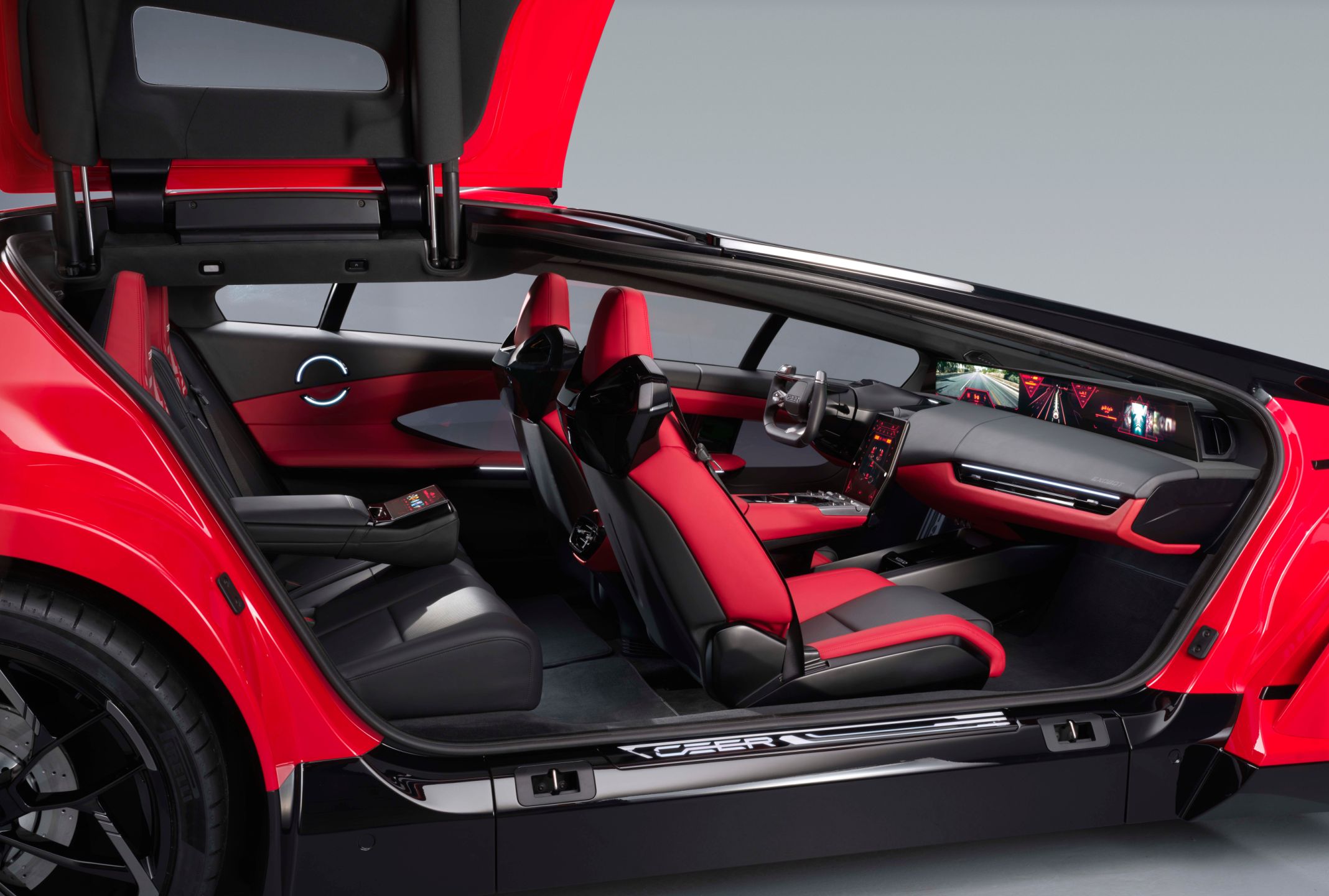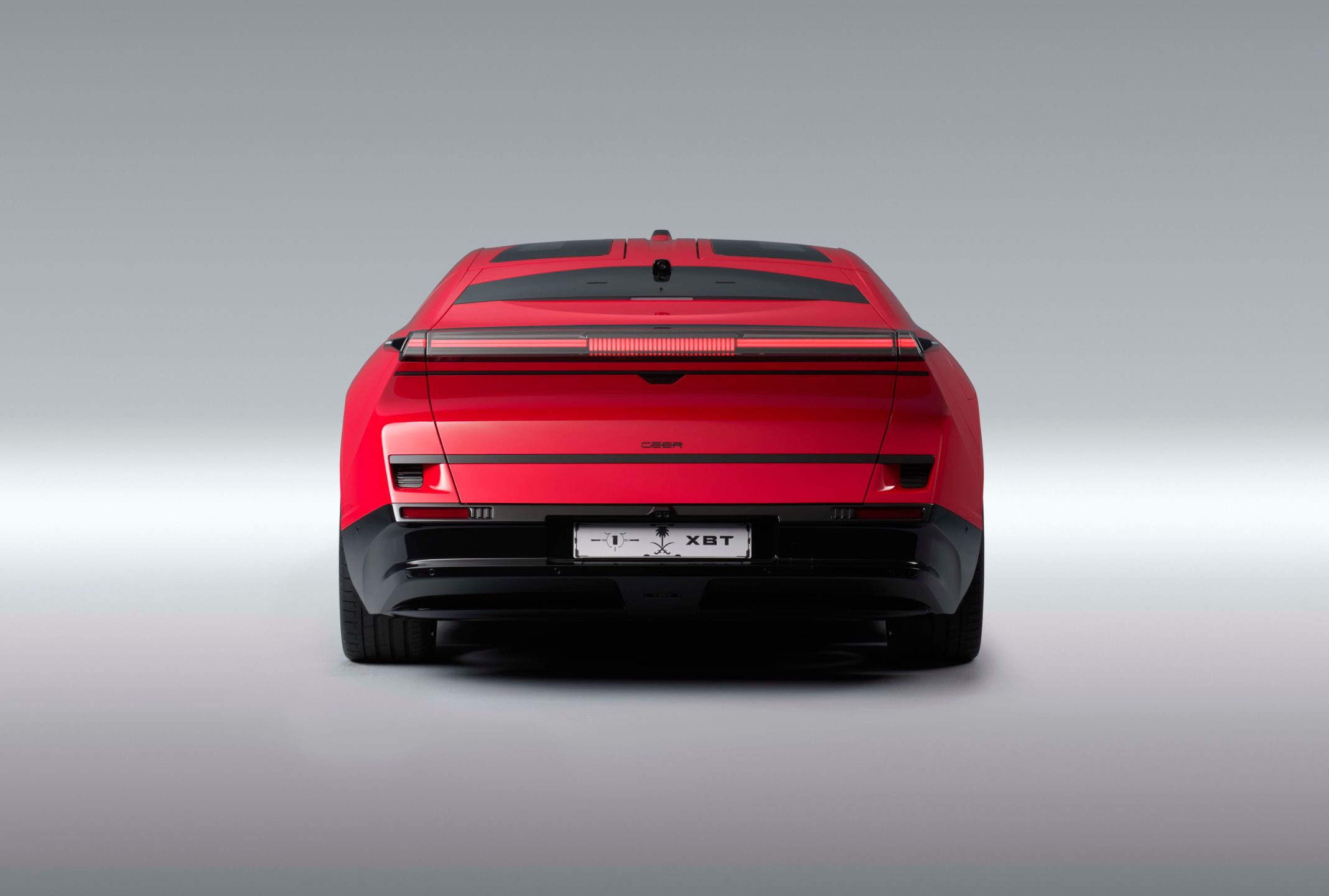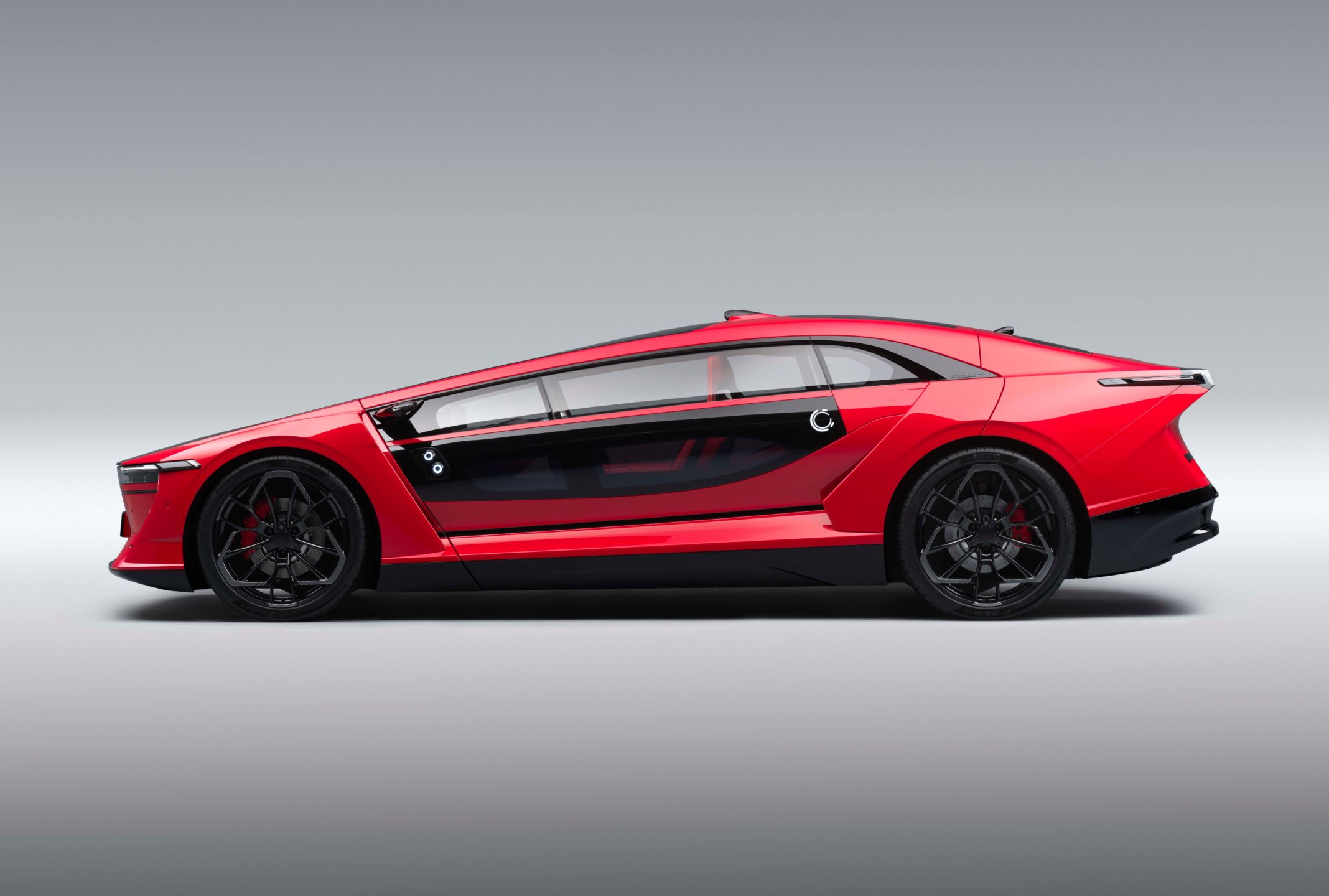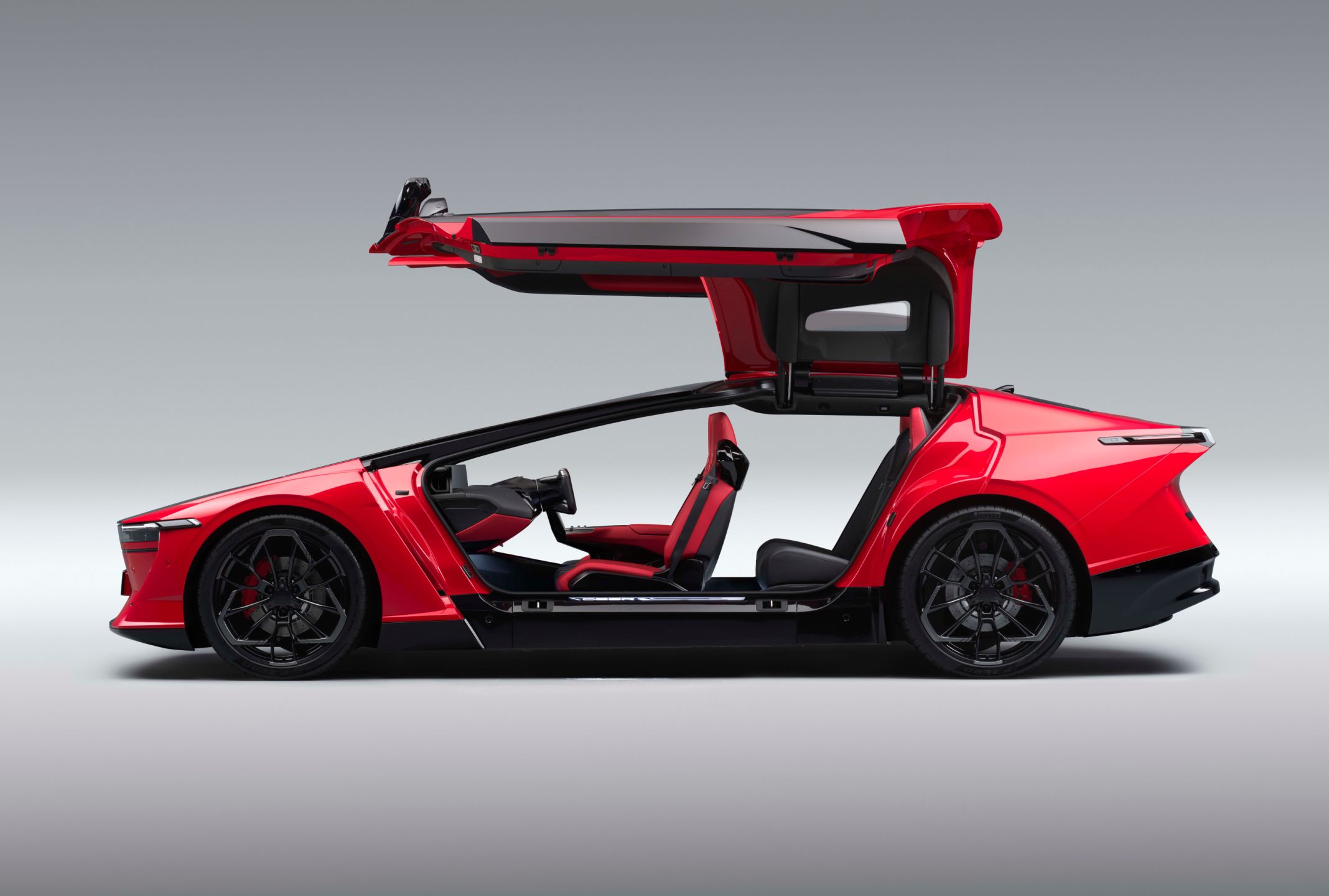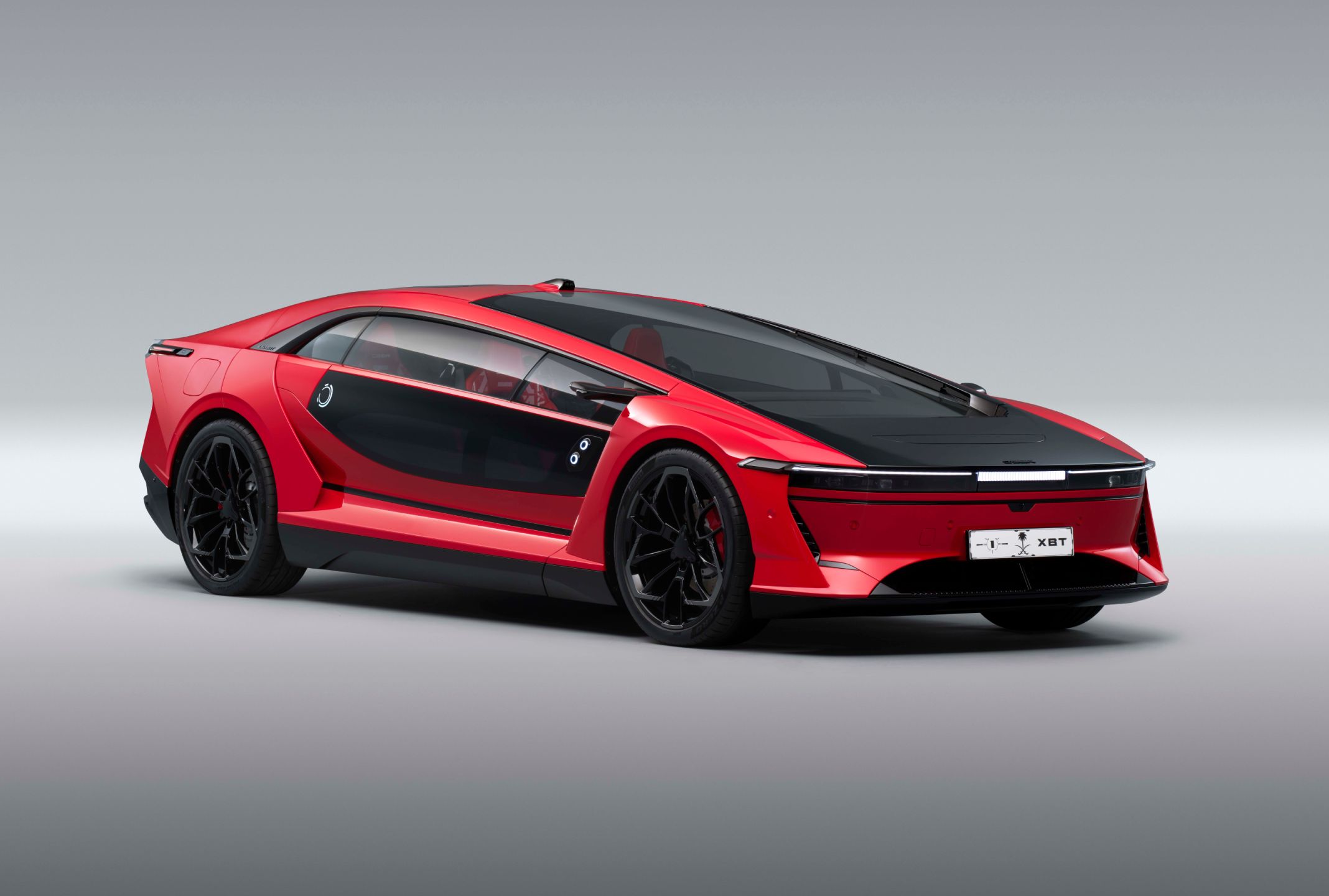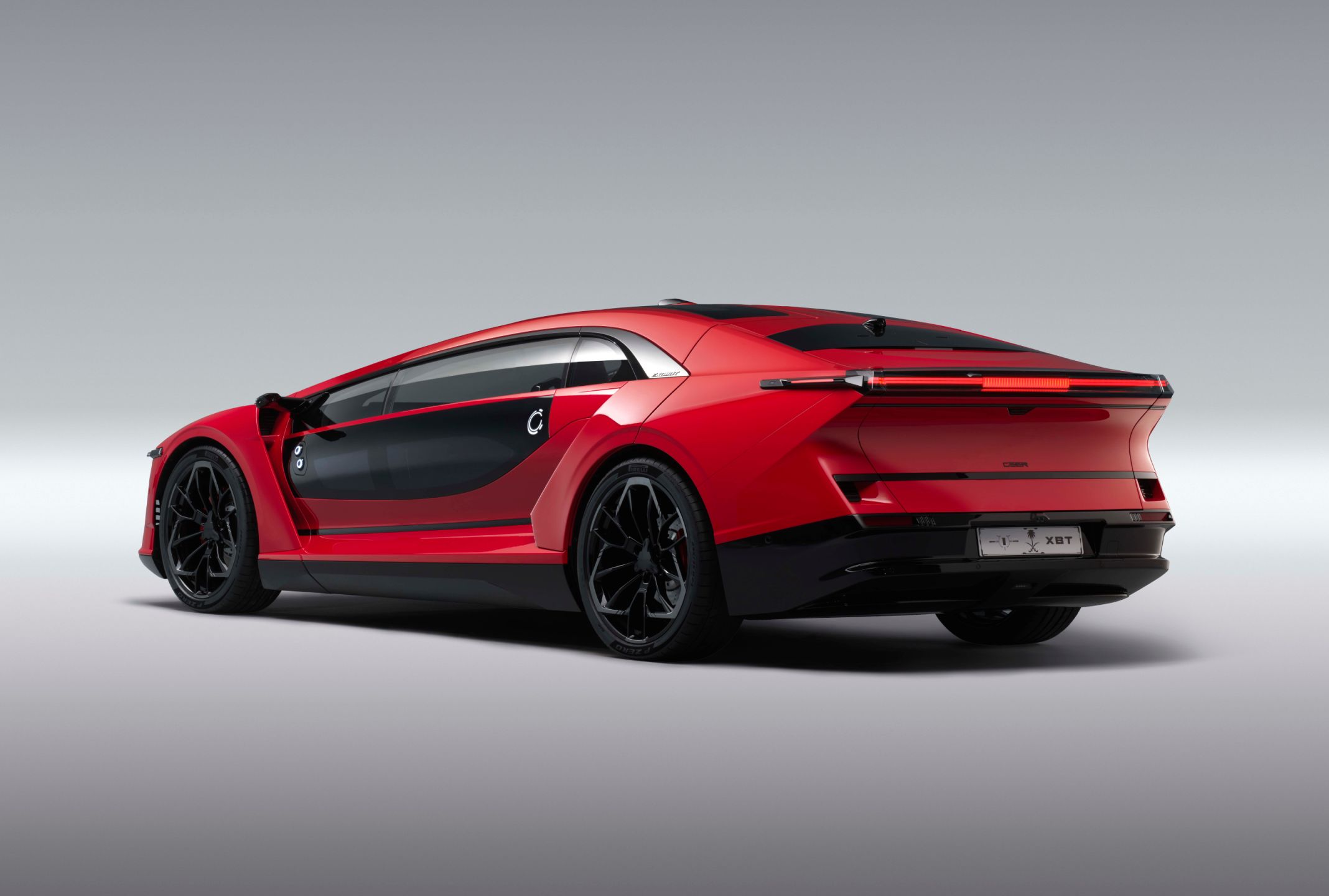





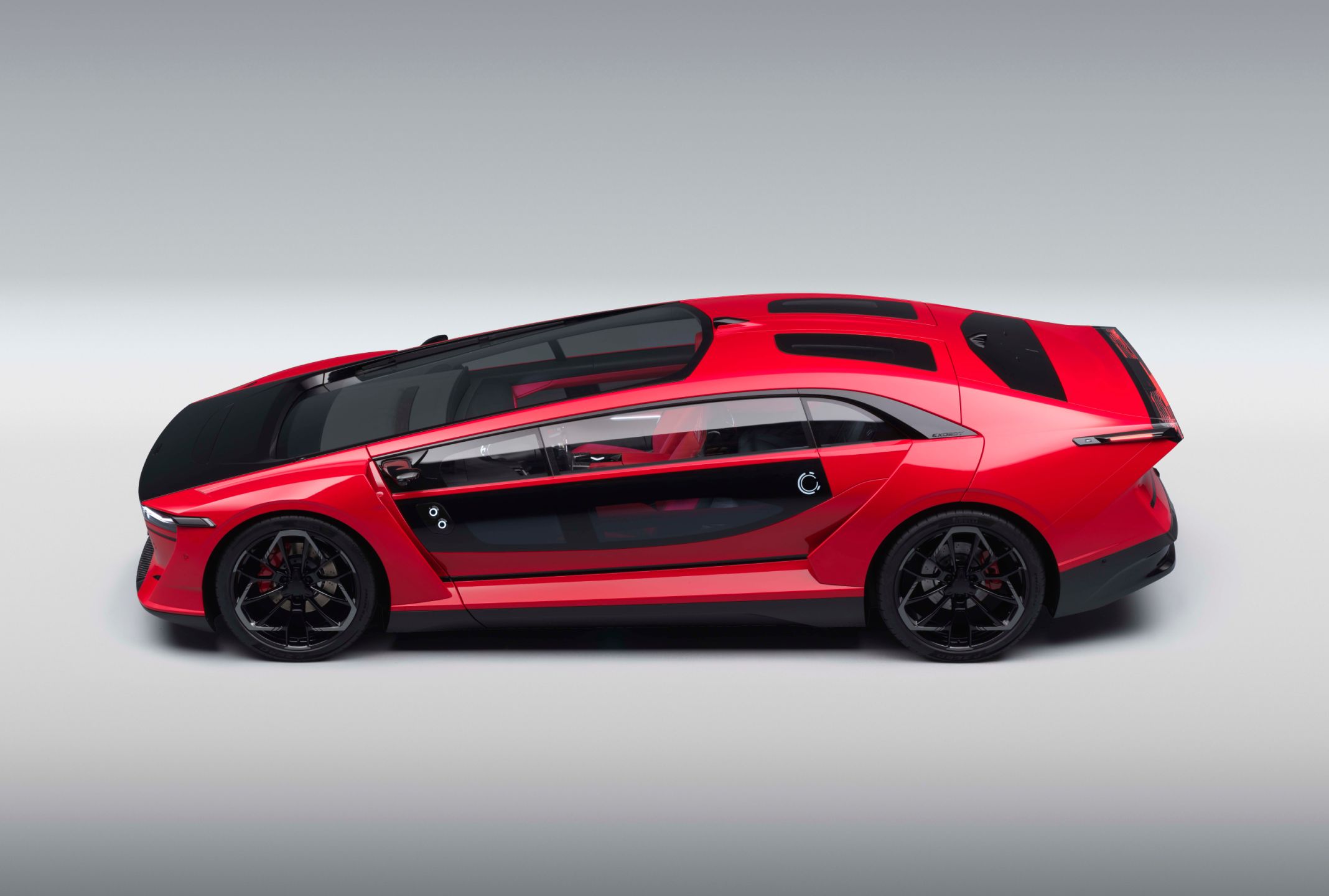
Extrovert and extreme in its design, the Exobot Sedan is an arresting – almost jarring – sight at first. Characterized by it sharp lines, jutting extremities and extremely low-slung roofline that is more rakishly angled than any production supercar and features the world’ biggest glass pane for a production car windscreen. Its futuristic style meanwhile claims inspiration from its native Saudi Arabia’s heritage, including the body’s Hegra architectural influence, and huge 24-inch alloy wheels modeled with a Najdi triangular Al-Lahuj ventilation motif.
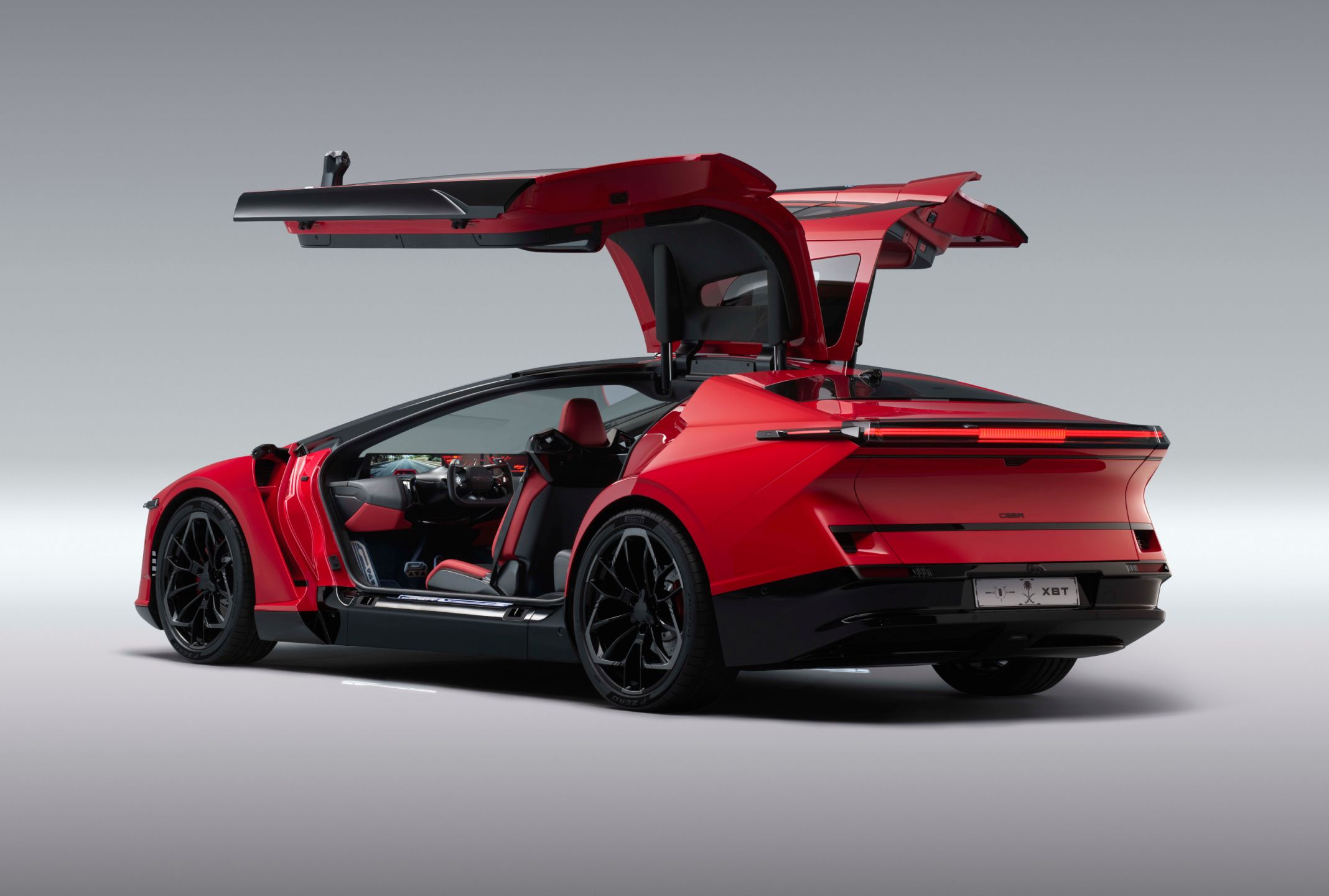
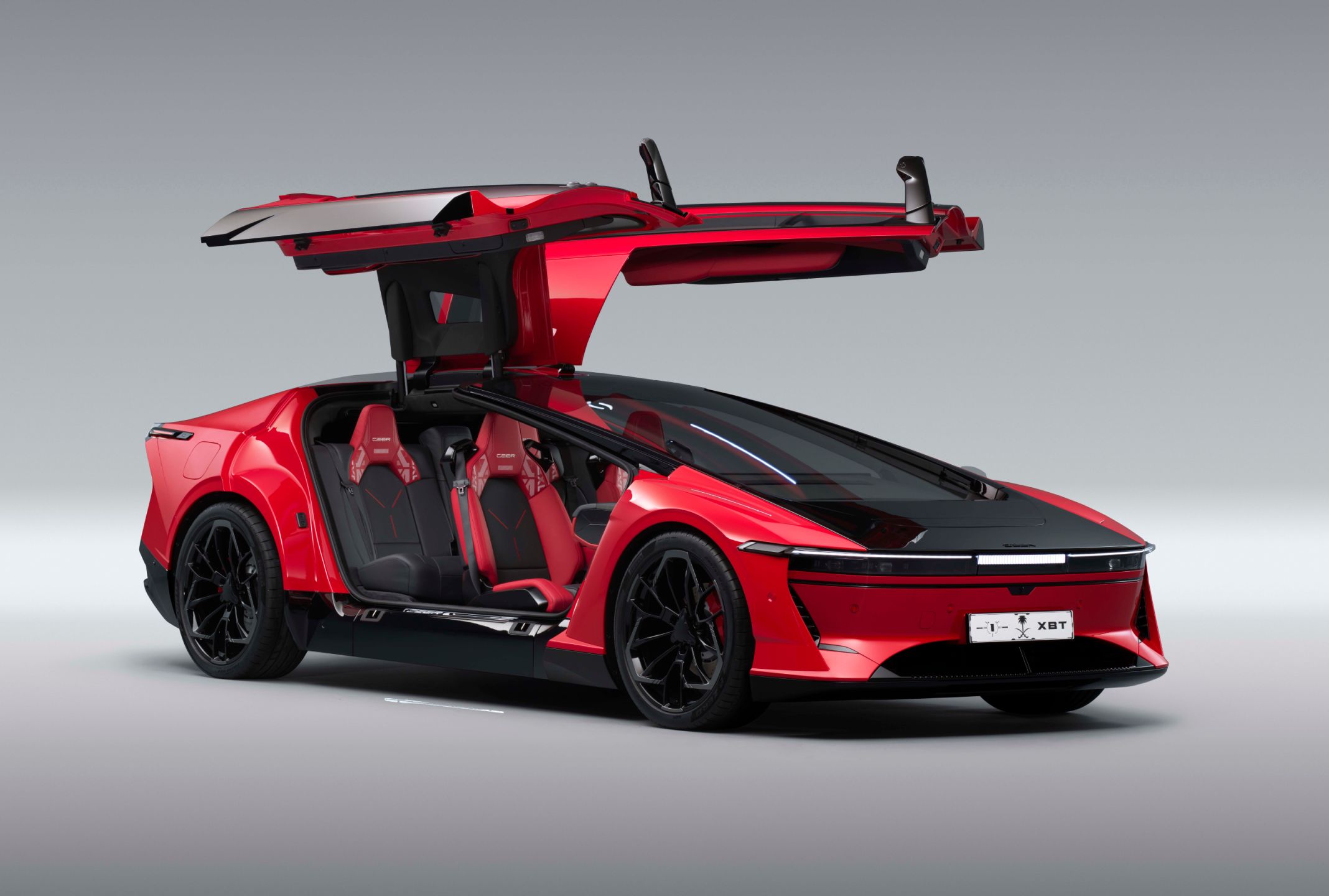
While two enormous up-swinging and weighty 90kg gullwing doors encompassing front and rear seat rows either side are re-dubbed Shahin Wing Doors after said local species of falcon, the Exobot’s 32-slot grille meanwhile recalls Saudi’s 1932 unification as a kingdom. Incorporating low-slung side windows for enhanced views but which can turn opaque at the press of a button, the Exobot’s cooling solutions are in turn designed for its indigenous region’s intense heat, and features a Halo Cooling system with dual front and rear AC units that rapidly reduces cabin temperature from 65°C to 32°C and provides optimized aerodynamic airflow along its long and rakish windscreen and roofline.
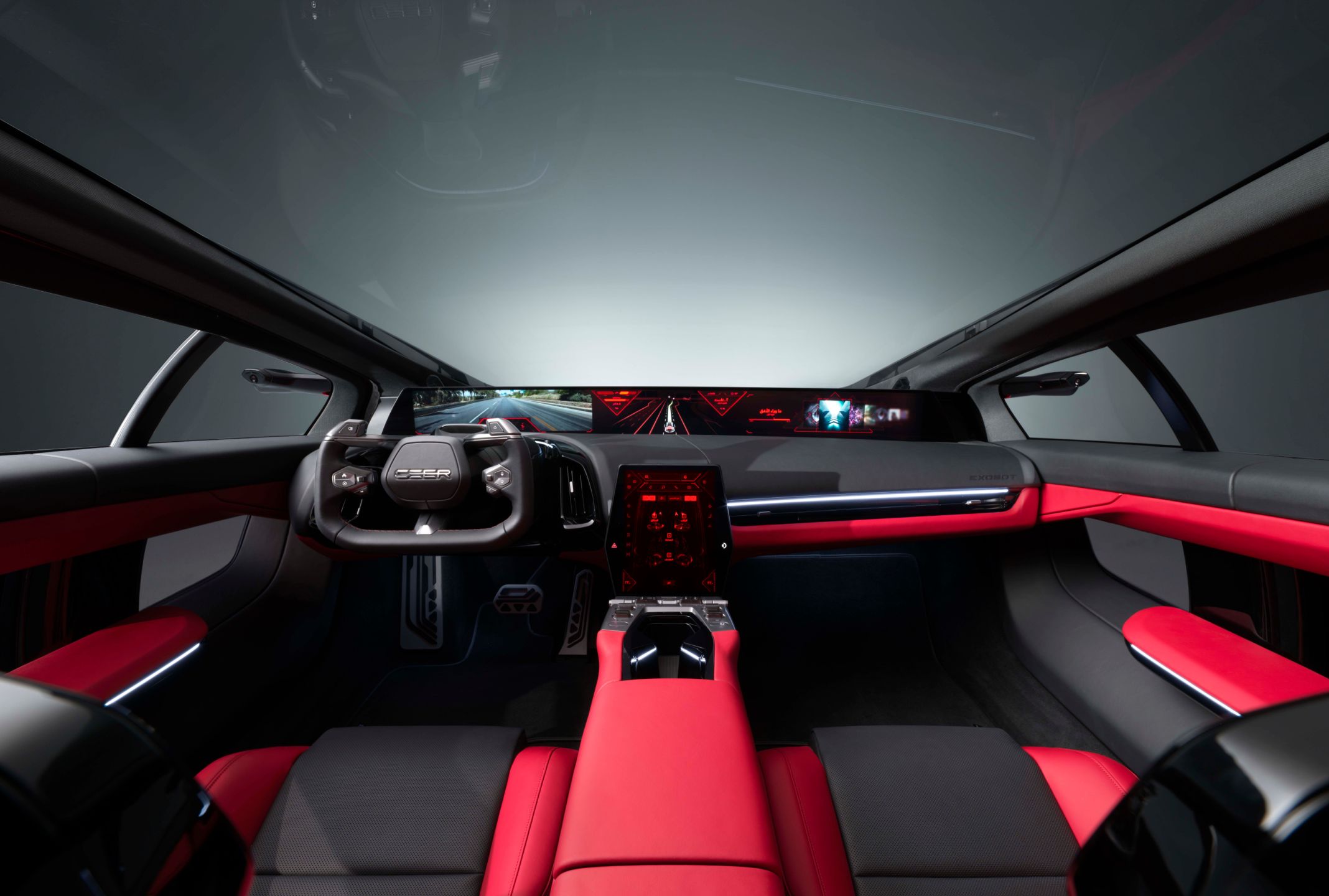
Equipped with a multitude of high tech infotainment and driver aid systems, the Exobot’s cabin is meanwhile designed in a similarly futuristic manner as its exterior, and features huge screens and de-cluttered horizontally-oriented surfaces. Utilizing a purely electronic steer-by-wire system with no mechanical linkage, the Exobot can greatly vary its steering speed and sensitivity, and reduce steering input from 440° to 160°, which allows for the use of small open rectangular helm in place of a traditional steering wheel. The Exobot additionally features all-wheel-steering for enhanced agility, maneuverability and stability.
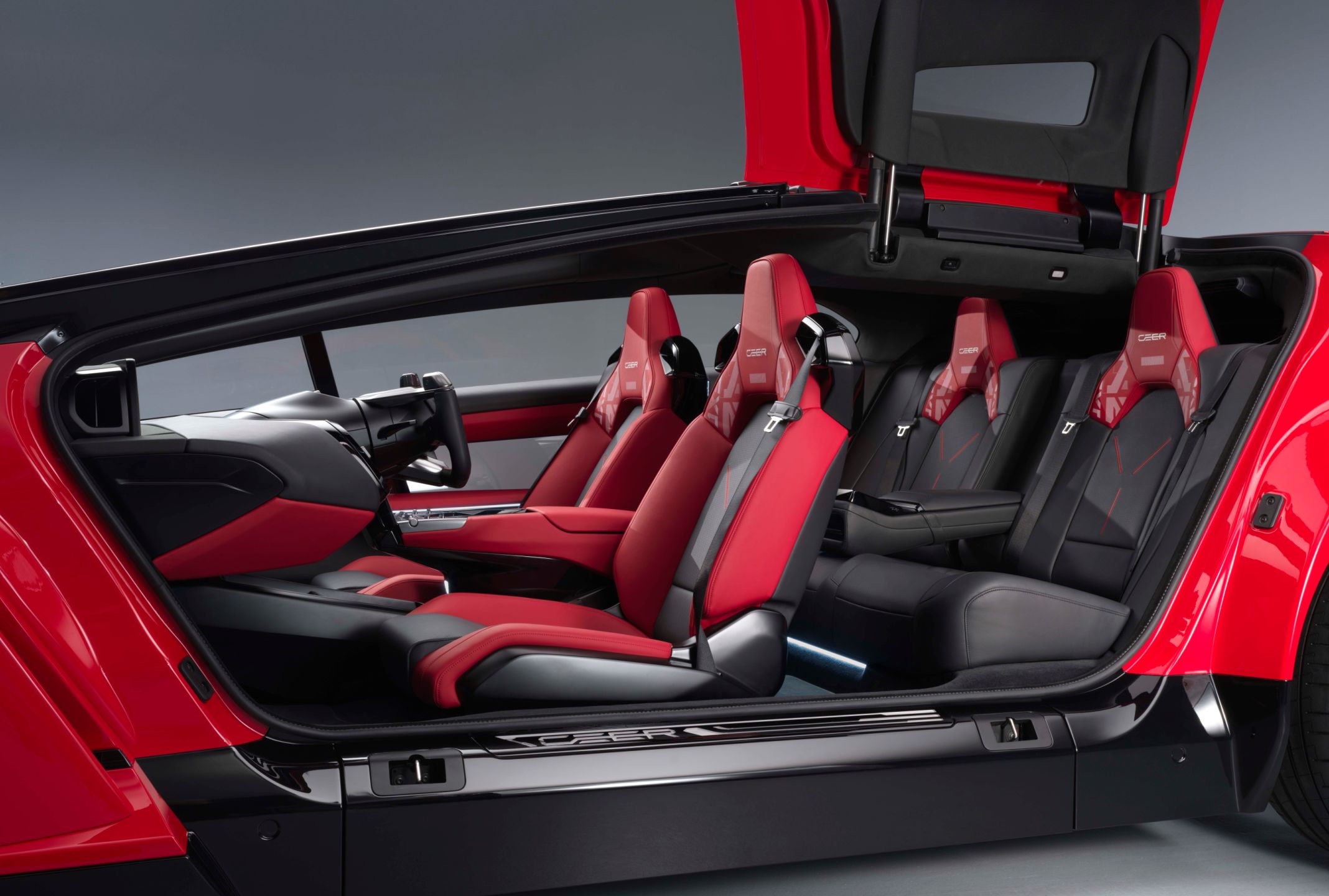
The Exobot’s prominently bolstered seats are comfortable and body hugging, but for taller passengers the rear seats are short on legroom and lack the necessary headroom, and require such tall passengers to actively slouch or crouch for their head to clear the gullwing door shut height. In front space is better but taller drivers sit higher than ideal with the head very close to the roof and rakishly angled windscreen. While lower seat mounting would certainly be welcome, the Exobot’s cabin is more akin to a low-slung supercar than a large luxury saloon for tall occupants.
That said, the Exobot’s performance is similar to that of a supercar as well, with its two front and one rear electric motors developing a massive total of 838BHP and 737lb/ft torque in standard specification. This enormous output put down with all-wheel-drive traction allows for rapid 2.6-second 0-100km/h acceleration and a 230km/h top speed. A more powerful version slated to be introduced at a later date, is meanwhile expected to develop 1,111BHP and 1,106lb/ft, to enable it to carry its substantial heft through the 0-100km/h benchmark in just 2.1-seconds, and onto 250km/h.
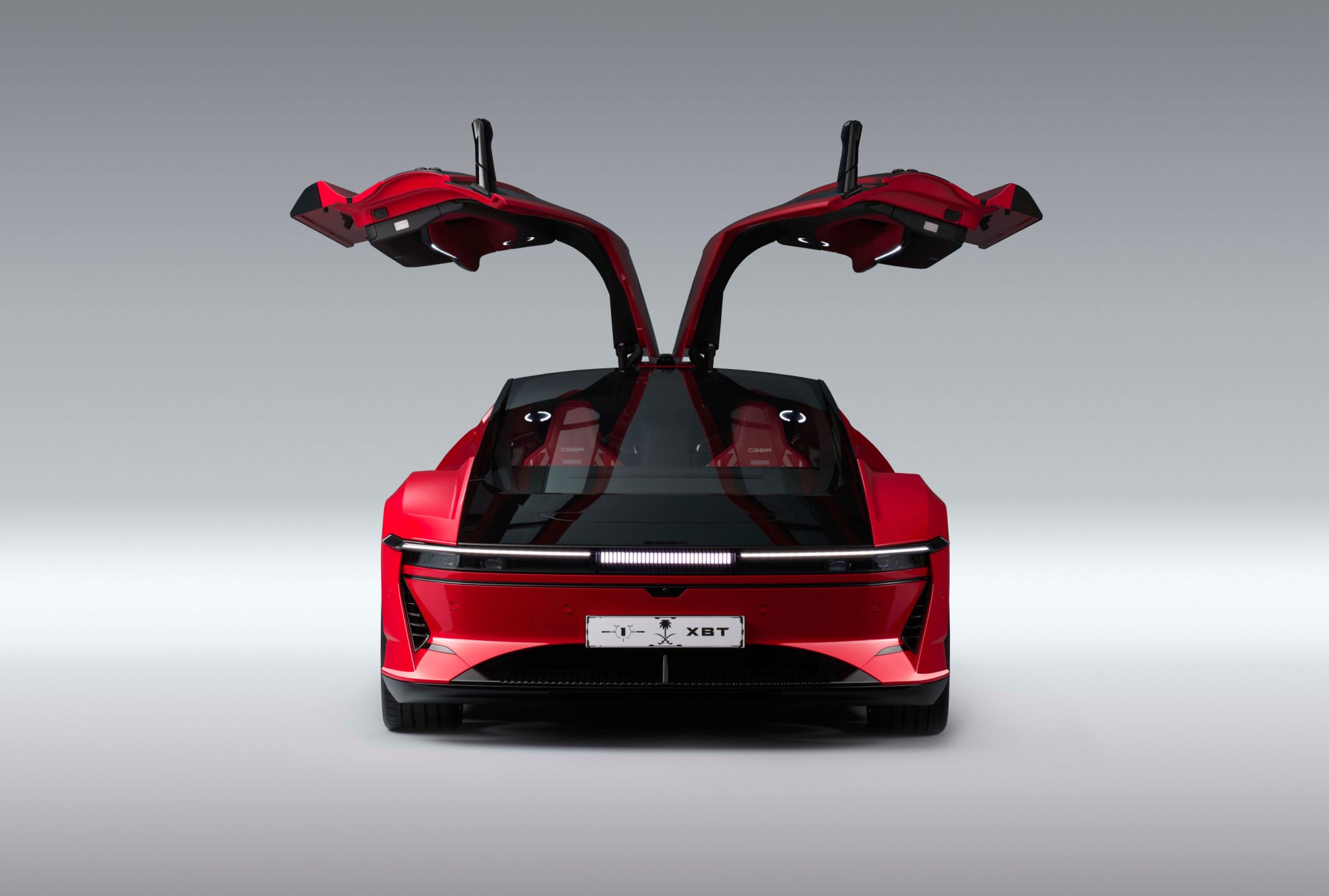
Specifications: Ceer Exobot Sedan
Engine: 2 front + 1 rear electric motors
Gearbox:single-speed automatic, all-wheel-drive
Power, BHP (PS) [kW]:838 (850) [625]
Torque lb/ft (Nm): 737 (1,000)
0-100km/h: 2.6-seconds
Top speed: 230km/h
Driving range, NEDC (estimated): 670km
Charging, DC / AC / standard travel charger: 250kW / 11kW / 3kW
Battery capacity: 112kWh NCN
Suspension, F/R: Double wishbone / multi-link, air suspension
Steering: Steer-by-wire + rear-wheel-steering
Length: 5,260mm
Width: 2,102mm
Height: 1,428mm
Wheelbase: 3,200mm
Ground clearance: 120-165mm
Luggage capacity: 424-litres
Tires, F/R: 285/35R23 / 295/35R24